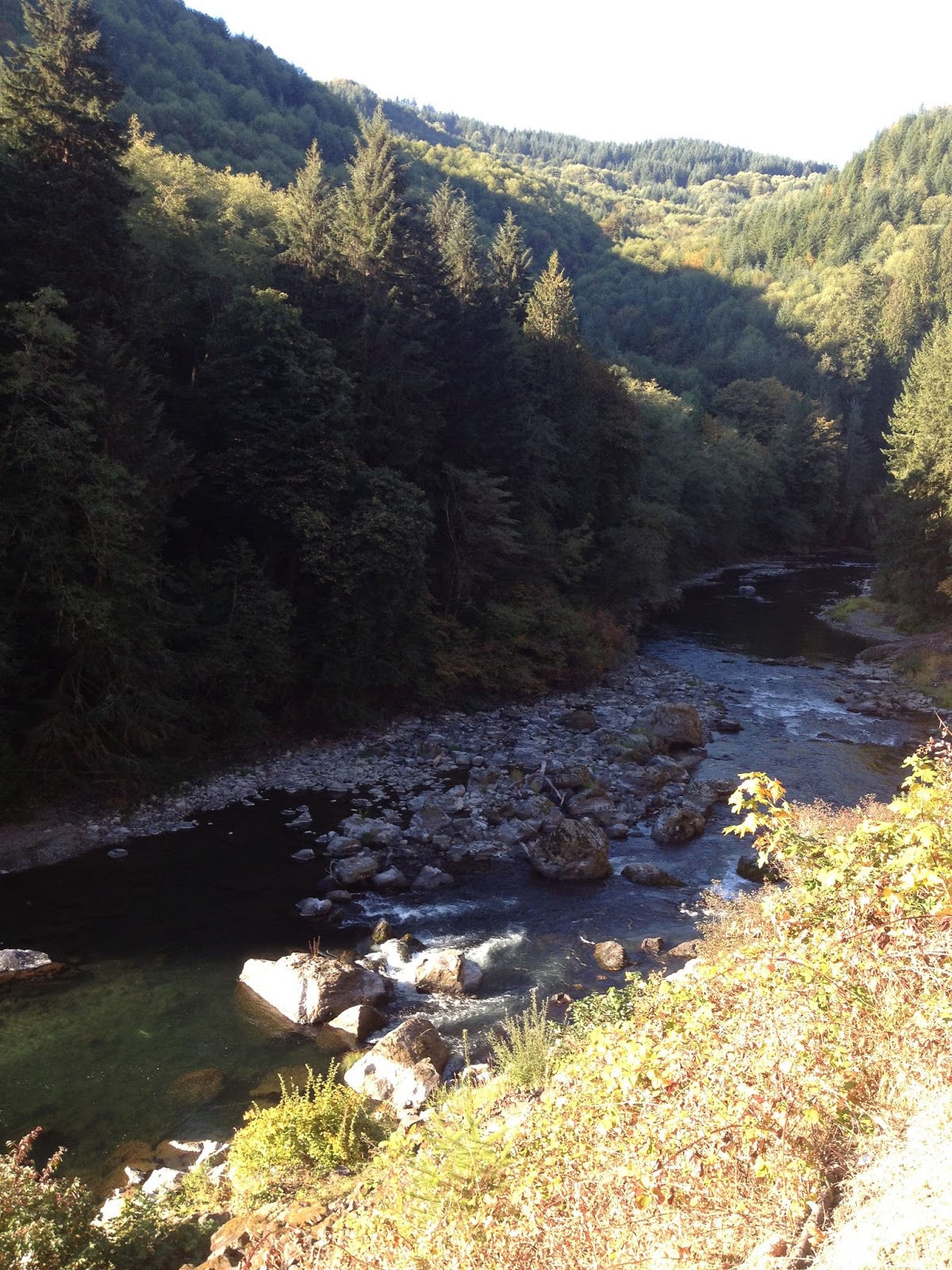
The Deschutes River - updated


The Deschutes is a truly unique Steelhead river, it can be the sweetest most friendly river you've ever known on one trip and then leave you beat-down and fried the next. The fish can be aggressive and trouty or they can be virtually non-existent. Some times it seems you can make the best casts of you life into a full on gale, other time a slight tease of wind knock down every cast. The river will love you and then toy with you.

The Deschutes River in Oregon is like a steelheading mecca in so many
ways, not the least of which is that everyone goes there. Yeah it gets a little crowded there sometimes, at least the road access does, but the River and the Steelhead that run it do really deserve this fond attention of Steelheaders when it's on, and it is on a lot in the past few years. Sometimes it is not on, however.

I landed my first dry fly steelhead on the Deschutes. It was very close to the mouth of the river. I had hiked up from the boat launch with a couple friends. It was a Saturday morning and the river had a good number of people on it. At first it seemed like there would be no where to fish, but after not too much hiking. my friend who knew the lower river well said "Steve why don't you stop and fish here. We'll hike up further"

At first I was not pumped by the water he pointed out. the flow looked a little slow and laminar, but there were boils out to about 50-60 feet from the bank. This reminded me of just a few days earlier when I was fishing the Klickitat and I met a local who had explained to me that submerged boarders were key for fishing skaters over. He said that the fish would sit relatively close to the surface, because of the neutralizing turbulence created by the boulder. This made be reconsider my opinion of the water I was about to fish. I tied on a skater and headed up the run to a likely starting spot, tough it really was pretty uniform for several hundred yard up and down the bank.

I tossed the fly on to the water before I ever set foot in the run and immediately the water boiled, but that was it. the fly did not go down, the fish never came back. About 15 minutes later however, as I worked done the run, I got another boil. this boil came just as I was mending my line out from the curly water behind a boulder. My fly jump right out of the fishes boil. I think I cursed pretty loud.

I cast out with the same amount of line, but a good 20-30 feet up from where the boil came, as that was well into the swing. as soon as the line tightened, a red cheeked steelhead came up out of the water and took the fly on it's way back into. That image is burned in my mind to this day.

The fish fought better than any other steelhead I have ever hooked, incredible speed during his big run. My hardy was going so fast, I thought it was at the highest pitch possible, then it went up noticeably. The fish jumped so far away I wondered if it was the fish I had hooked or just a fish jumping way down river. really incredible.

I fell in while landing the fish, which ended up killing my camera, but not before I got a few shots of the wild fish. it was nearly 30". See pic below.

I headed up river to the area around Mack's Canyon that afternoon when my friends headed back to Portland. I fished a shadow cast by a cliff near Ferry Canyon and got a late afternoon fish too. That was a really great day on the Deschutes.

I have fished on it for both kinds of days, hot and cold, on and off. Unfortunately last time I was on it was off. It was so off, that when My friend Charlie and I headed up to fish the water between Shear's Falls and Mack's Canyon there was no body there. This section of river usually houses hundreds of anglers at this time of years (Sept.), but it was empty. We were thrilled, all the runs were ours; Windknot was ours, Hole in the Wall all ours, we even had the pipeline(and I mean the whole thing) to our selves. The problem was there were no fish grabbing the flies. we talked to guides across the river, they hadn't been hooking fish for several days. this was this year 2008, Dam counts were huge, but the fish just weren't there the days we were.


Charlie and I fished the Deschutes for a few days in 2007, and we (mostly Charlie) did great we caught 4 fish in just a few days of fishing and lost others. The dam counts weren't nearly as good as in 2008, but we were finding fish.

The good times are possible on the Deschutes, maybe more than anywhere else. In 2001, on my first trip to the Deschutes it felt like the fish were every where and I know from BR who hit it again in 2002 it was epic again. Even this year I heard stories of guys hooking 10 fish out of a run in a single morning or evening.

I think that it is because the Deschutes can be so giving, that getting skunked on this river can hurt so much. When you are catching fish, the sun is friendly, Camp is perfect, the wind is a fun challenge, and wildlife is abundant, the Busch lights even taste better if that is even possible. Things just go your way, or maybe you just going there way, but you're happy. When the skunk is on, this Oregon blast oven has no soul, the barren landscape is devoid of life. The sun burns down on camps that have no shade and the ones that do are taken. The Busch light, gone already. The wind, in your face.

I have caught fish on the Deschutes on both big and small flies. Fishing smaller flies (3-8) flies on a Scandinavian head is my favorite way to fish the rivers, but I have had success and been able to take fish in broad day light using Skagit heads and big flies (3"-5" long). I have usually used either my 7133-3 Burkheimer or my 6126 Sage both are great for smaller flies and the smaller fish that are common on the Deschutes, but the 7133-3 the more versatile of the two. I will however try an additional rod next time, my 7141-4 Sage while it may be stouter than the smaller fish warrant, it casts a great long line such as a Hardy 65' Mach II 570grn or a Rio Power Spey 7/8 and these long lines and way fun to fish, the Loomis 15' 7/8 grease line would also be fun. One down side to these longer rods and longer lines is that they run into trouble when conditions get tough, like a rough wind or a tight bank, but I have found that while they are limited it is not nearly a limited as most people believe now days.

The flies I like for the Deschutes are the Green Butt Purple Skunk,  and variations on standards the Max Canyon, the skunk, etc., and Muddlers in purple and brown, after that it is all about finding or making up stuff you like. Check out the Deschutes Angler and Flyfishusa.com web sites for great Deschutes patterns. Also check out Kent Helvie's book on steelhead flies, there are some great Dec Hogan patterns for the Deschutes in it.


In the Summer of 2016, I will be floating the lower canyon water with guide Travis Johnson. He is renowned for his casting ability, and has a good reputation among people whose opinions I trust. this will be a three day, two night float.

2016: Pictures


Wet-Fly Selection for Summer Steelhead


The other day I was at a friend's bass pond, which is a very clear pond. The pond is loaded with big bass, some are really big, like over ten pound. Some of these fish are so big in fact,  that one of the really big fish tried to eat a 15” bass as I was trying to land the smaller fish.

Anyway, as I was fishing this pond trying to get one of these giant bass to eat my fly, I noticed how they would charge the fly from a distance but then hesitate before taking to investigate the fly. The fish would some time hit right away, but more often it would sit just below the fly and either eventually take the fly or reject it. With the water being so clear, it took a very realistic looking fly to fool the bigger fish. A frog painted popper worked, while a yellow, green, and even minnow painted popper did not.

I think that this often happens while steelhead fishing as well, though I don’t think it happens to the same degree as the current is moving the fly through the water, and that means a steelhead is looking a  moving fly and has to make a more momentary decision on whether or not to take the fly. I believe that steelhead often see the fly at a distance. They move into position to intercept the fly. Then they often investigate the fly before taking or rejecting it.


Cummin's Special #5

I have seen this happen a few times, by watching from above as another angler has a fish visibly following a fly. I have also often had fish grab the fly as it changes its course in the swing (going from dropping with the current to swing in toward shore), which leads me to believe that the fish is often hovering near the fly and it reacts when the fly’s course changes.

So how do we choose a fly that will attract a fish from a distance and yet still be attractive enough to eat upon close inspection?

Over the last 15 years I have been trying to figure out the answer to this equation. Of course every day of fishing can be different, fore as a fishes environment changes so may its preferences in fly color, size, presentation, etc.
For most of my time fishing steelhead I have had an approach that assumed bigger was better. Figuring that because steelhead are eating large food in the Ocean (or great lake) that they will prefer something large to eat; Such as a 4” string leach, an intruder, or a spey fly tied on a 1.5-3/0 hook.
Yellow Jacket #5
However, over the last few years I have been catching more and more summer steelhead on smaller flies. And often hooking fish with small flies in bright sunlight, which I thought would be very unlikely, but has now happen several times.
Last year on my annuall trip out to fish the rivers of the Nez Perce, I had a day where i got a fish early on a #3 Yellow Jacket (a Dec Hogan pattern), a consisant fly with alot of black in it. once I got this fish I met up with my fishing partner and he was fishing the same fly, this makes sense as we have both caught a number of fish on this pattern in sizes #3 and #5. Well, since I had already landed a fish and would be following my friend down the run, I switched flies and decided to put on a #6-8 Purple Green Butt Skunk. Within a few casts I hooked into a large Steelhead. This really increased my confidence with this fly, so I kept it on for the rest of our time on the river. and it paid off with more hook ups over the next day and a half, even under bright mid-day sun.
Purple Green Butt Skunk #6
Based on that success and similiar experiences on other rivers and other trips. I am beginning to rethink my preference for large flies. I think that most productive steelhead rivers, not all, are clear enough for a Steelhead to see a #5 fly at a distance of at least ten feet, often I believe the fish can see much further. Indeed, I have seen rainbow rush significant distances to inhale a small nymph or egg pattern.
So using a big fly to get a fishes attention, may be effective for getting a fish to see the fly from a greater distance. But if you are fishing clear water the distance may be more than is needed and the fly may be intimidating to the fish once they are in close proximity. I think that if a fish can see the fly from a reasonable distance based on water and light conditions it is a good bet to use a small (#5-8) fly as the fish will have a smller object to interperate and a less intimidating object.

No Name #3

There are times when I think fish will respond better to bigger and/or brighter flies. so it is good to keep your box stock with a variety of patterns that cover the gammit. Have a few larger flies tied in muted colors, some big bright flies, and some small bright flies, to go along with your small subtle patterns.

I also think that adding detail to flies, that give them a more life like appearence up close helps in getting a fish to take. I add jungle cock as I think it looks like an eye. I also will use sparse grey spey hackle to creat the look of translucence.


no name #5


The Broadman River - Michigan


The Broadman is a small river that flows into lake Michigan at Traverse City. I had a chance to fish this river in mid-August 2012, while I was at Grand Traverse for a conference. This river is known to get a steelhead run in the fall and spring and I think with a small spey or switch rod this river could be a really fun time.

I caught a number of trout mostly on streamers.

Upper Arkansas River - Colorado


I fished the Upper Arkansas in Colorado in 2011 with my cousin. We had a great trip on the river and caught several hard fighting browns on nymphs and even rose a few to dry flies. The river was very quiet on the days we were there. It was early in the year and most people were skiing rather than fishing I guess did have a few drift boats come down the river, but they did not hurt our fishing at all.

Kalama River - Washington


I have not fished the Kalama River, But while fishing the Cowlitz I took a ride over to check it out. Here is a picture. this spot had some of the better access. By access I mean a trail to shimy down the hill side on. There were alot of anglers at each pullout on the day I was there. Pretty river.


Cowlitz River - Washington


 This past fall I fished for a couple days on the Cowlitz river in Western Washington State. I was alot of fun. There were plenty of gear guys fishing and I had to rotate through the the Blue Creek Run with other fly anglers, but I landed a ridiculous number of nice hatchery Sea Run Cutts in the 15" plus range on my 6 weight spey. In the first day of hard fishing. I think I landed around 20 of these fish.


I also landed a nice steelhead on that first day on the Cowlitz. She ate a #8 brown and black Matuka. Really a great fish on the small rod. I really liked the Cowlitz.

Casting For Steelhead & Salmon

In the words of Dec Hogan the fly rod and the line are essentially a "Weapons Delivery System", with the fly being the weapon for the gathering of Steelhead and Salmon. I like this way of looking at the process of fly fishing for for these fish.

The rod and the reel and the line are secondary to the fly, in terms of hooking and landing a fish. If the fly is not there the fish can not eat it. So there must be a fly or there is no fly fishing. Of course, the other tools are also critical process. a leader is needed to hold the fly to the fly line without tipping the fish of to the presence of the fly line, and eventually to tether the fish to the fly line. The fly line is needed if you want to fish further than about 15' (which is aproximately the distance that I can throw an unweighted fly by hand), as the fly needs to be carried by the weight and momentum of the flyline to be delivered to fishes location in the river.

A person could cast a fly, leader, and fly line by hand and catch fish(Lee Wulf famously accomplished this catching a salmon, long before I was born), but this decrease the efficiency of the process to such a degree that it would quickly become frustrating. I, infact, strive to find efficiency in my fishing exploits, though not to the degree that I would take upnymphing or gear fishing on a regular basis. Anyway, I digress, a flyrod is, in my view, a necessary tool in the delivery of the fly.

I have caught many fish with either no reel, or a malfunctioning reel, and while this is also possible, it is again, inefficient. Reels are necessary too.

Each river and each season bring their own challenges and requirements, when it comes to getting your fly in front of the fish you are after. Sometimes fish want to eat small (#3-#10) flies on or just below the rivers surface. Other times fish prefer a big fly (3"-5" long) fished 3'-4' below the surface, and some time even deeper than that. Some runs have fish sitting just a few feet off the bank, while others require a very long cast to get the fly out to where the fish are.

The goal is to figure out what is reguired to find the fish and to then accomplish the delivery of the fly to the fish in the most efficient way possible. Such as fishing a skagit head on a small, tight-to-the-bank, spring river.

Above and Below: Skagit Casting a CF Burkheimer 7133-3 w/550 grn Comapct Skagit. I am casting about a 5" string leach on about a 5' leader and with a 9' T14 tip.
 My favorite way to fly-fish is with a two handed rod. I like to cast long belly lines especially for summer steelhead out on the clearwater and the snake. Although I often fish both Skagit and Scandinavian heads very often throughout the year. Last year, infact, I fished only a Scandinavian head on the snake, where I would normally prefer a long belly. So... there are a lot of ways to skin a cat, I think the best way is to find what you enjoy the most. That way you will spend more time fishing, and less time being frustrated.

Below are some additional casting videos using various rods and lines for different purposes. I do this as a general reference.
Above and Below: Single speys with a Scandi Head: CF Burkhiemer 7133-3 Airflo Scandinavian head on the St. Jean river for Atlantic Salmon. Fishing a #8 Blue Charm.

-------------------------------------------------------------
Above: Rusty casts a Sage 6110-4 w/ one hand on the Trinty River.
Below: I do a snake roll with the same outfit.
-------------------------------------------------------------------
Below: Doing a Snap T with the Sage 6110-4 and a Compact Scandi - Grande Ronde.
-------------------------------------------------------------------------------
Above: Tom Town performs a left handed single Spey w/ a 16' Bruce and Walker and a Next cast Fall Favorite. Oconto River

Below: I perform a cross body single spey with a G. Loomis 15' 7wt and a 65' Hardy MachII


Rivers of the Niagara Escarpment - Wisconsin


The Niagara Escarpment is a continious cliff and /or slope that runs in an East/West curve and stretch from Illinios to New York State, where the most famous part of the escarpment is located, Niagara Falls. In Wisconsin, rivers feeding Lake Michigan from the Illinios border up to the Northern tip of Door County, flow to the East from atop the Escarpment into the lake. These represent alot of our most productive steelhead rivers in the state, such as: the Root River, The Milwaukee, The Sheboygan, the Manitowoc, the Twin Rivers, The Kewanee, the Anhappee, and the streams of Door County.

While these water all vary in character, such as water color, flow speed, etc. they are all productive steelhead waters at certain time each season. Some have a multitude of quality public access, Such as the Kewanee, the Manitowoc, and the Milwaukee. Others such as the Sheboygan have limited access, unless a pass is purchased, to give the angler a chance to pay twice for the chance to catch a steelhead, though the sheboygan is a productive river.

While a visiting angler would likely find these rivers difficult to figure out into a period of a few days or weeks. Two of them are heavily stocked, The Root and the Kewanee, and dont take much figuring out. the other rivers and streams can be very productive, if you know them and if conditions are right, and if you're lucky.

These river can blow out quickly. Often if a big rain falls at the right time of year, it will bring the fish in, but an angler has to time the fishing to coincide with the fishing moving in, but before the river blows out.

Even though these rivers are very small compared to Western rivers, they can for the most part, be fished with two handed rods.


some rivers are hundreds of feet wide, while others could almost be jumped across. But water flow changes through out the year, and a stream can fish like a river when conditions are right.  One of these tiny rivers, that flows close to my home looks far too meager to swing flies on for most of the year, but when the best days of the run happen, during high flow periods, I will fish a compact skagit on my Sage 6110 11' 6wt switch rod and work string leaches and similiar flies in bed rock slots and along steep banks. Most anglers, even those that fish two handed rods would never imagine that these streams could swing so well.


Renous River - New Brunswick


While fishing the Miramichi river in New brunswick in the summer of 2008. My fishing partner Bob and I along with our guide Jeremy, made a side trip over to fish the Renous river which is a tributary of the Main SouthWest Miramichi River. The Renous enters the main river down stream of where we were staying at Country Haven Lodge near Blackville.

Both the Miramichi and the Renous were high and off color during our trip, and we did not land a fish. We actually only fished this one run on the Renous, but I thought I would add this as reference to the look and the size of the river.

I really enjoyed fishing this run on the Renous, and was truly in constant expectation of a grab. There were some fish rolling and the run had a bouldery charactor.

Trinity River - California

Trinity River - California

I fished the Eel a few years back. after a few days of getting skunked. we finished up the last day of our trip checking out and fishing the Trinity. We didn't get any sort of sign of steelhead, but it was a pretty river.  Here are a few pictures of the river.
The Trinity flows from the Cascade mountains into the Klamath River and then to the Pacific. It seems to be a popular river for fising nymph and egg patterns. It is very clear water, at least when I saw it.